DESIGN
Dialogue 1.2
MUSIC
Dr Bernardi explored what it means today to relate to a place of memory. Almost a century ago, Robert Musil ironically observed that monuments had become invisible: despite being made to be seen, they paradoxically escape our visual perception.
“La cosa più strana nei monumenti è che non si notano affatto.
Nulla al mondo è più invisibile.”
Robert Musil, Monumenti, 1927
Even after many decades, Musil’s intuition has led several contemporary artists and architects to conceive new memorial forms, focusing increasingly on multi-sensory involvement and the motor-experiential dimension.
-
You touch the wall of names of the Vietnam Veterans Memorial in Washington, D.C. (1982).
-
You see the signatures engraved on the surface of the Monument against Fascism in Hamburg (1986-1993).
-
You listen to testimonies in the Audiovisual Museum of the Resistance in Fosdinovo (2000).
-
You breathe the vapours in the commemorative installations of Teresa Margolles (2001-2002).
-
You walk among the stelae of the Holocaust Memorial in Berlin (2005).
-
And you trample on the instruments of violence in Fragmentos, Espacio de Arte y Memoria, in Bogotá (2018).
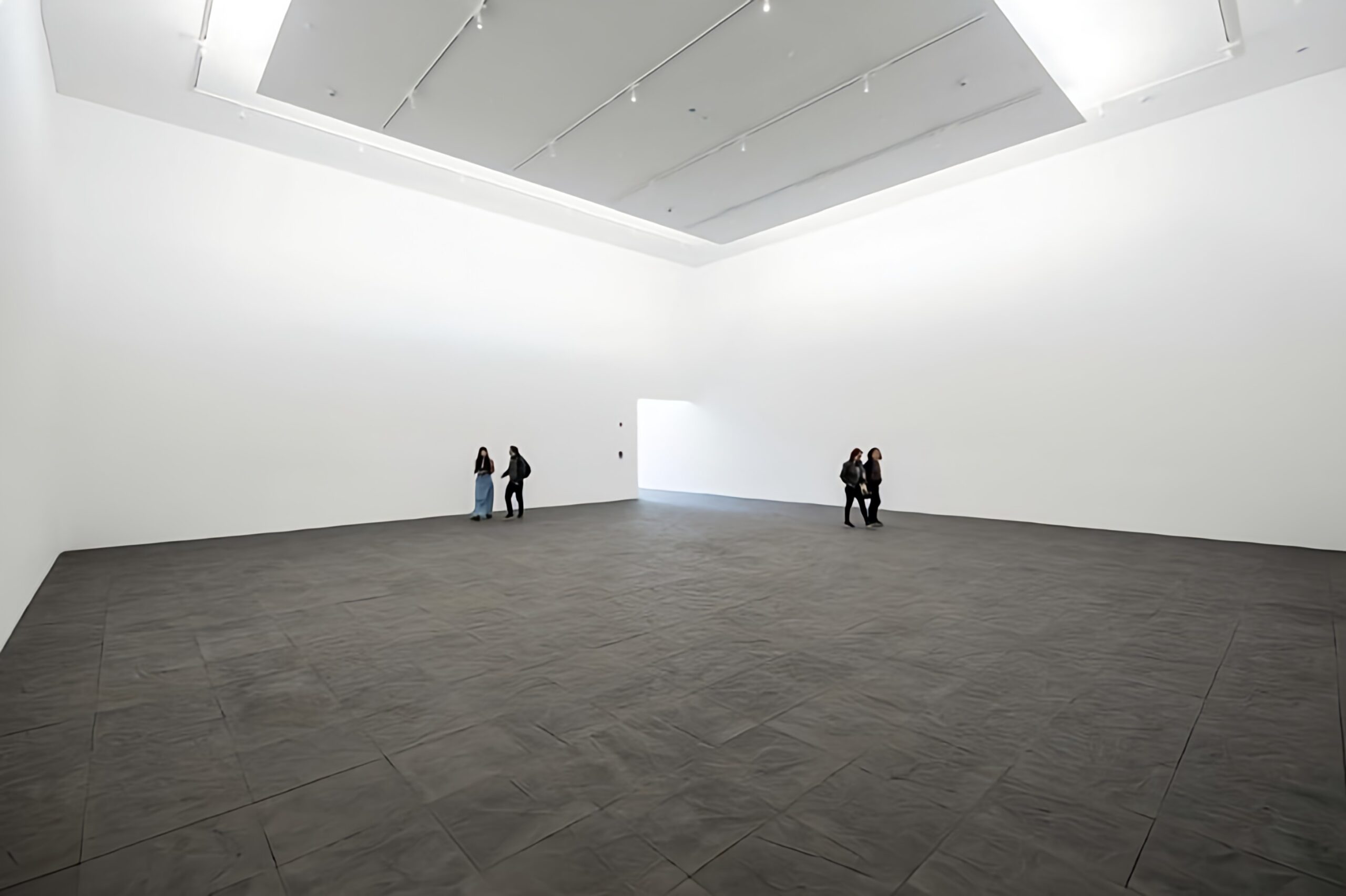
From Dr Bernardi’s presentation: Fragmentos, Espacio de Arte y Memoria, Bogotá, 2018, by Doris Salcedo. Photo: Juan Fernando Castro.
Memorials play a leading role in transmitting collective memory through their ability to remain functional while offering shared experiences, setting emotions in motion with significant effects on our neural circuits. From this perspective, places of memory are increasingly conceived as open devices, where the aesthetic and representative aspect gives way to collective experience and the active participation of communities.