Anna is a lecturer and researcher at the Institute for the History and Theory of Art and Architecture (ISA) of the Accademia di architettura di Mendrisio, where she also obtained her PhD with research on “architectures of trauma”.
Her research focuses on the aesthetic, ethical and political significance of places of memory related to historical events of the 20th and 21st centuries, and in particular on the ways in which memorial spaces are experienced. She is the author of Architettura e politiche della memoria. Louis I. Kahn e Peter Zumthor: due progetti non realizzati (Mendrisio Academy Press, 2023), winner of the Premio Emilia Zinzi per la storia dell’arte 2023.
MUSIC guest
ISABELLA TURSO
Pianist and composer, Isabella graduated with honours in piano and chamber music from the Trento Conservatory. She approaches the classical repertoire with the same ease with which she navigates jazz, rock, pop and rap, and has a unique ability to share her music with audiences while preserving the integrity and complexity of her artistic inspiration.
Over her career she has collaborated with numerous artists and released three solo albums, All Light, Big Break and Omaggio a Donaggio, as well as Variazioni, an album with rapper Dargen D’Amico. Omaggio a Donaggio had its world premiere at the America Opera Center in New York.
Keynote highlights
Dr Bernardi explored what it means today to relate to a place of memory. Almost a century ago, Robert Musil ironically observed that monuments had become invisible: despite being made to be seen, they paradoxically escape our visual perception.
“La cosa più strana nei monumenti è che non si notano affatto. Nulla al mondo è più invisibile.”
Robert Musil, Monumenti, 1927
Even after many decades, Musil’s intuition has led several contemporary artists and architects to conceive new memorial forms, focusing increasingly on multi-sensory involvement and the motor-experiential dimension.
You touch the wall of names of the Vietnam Veterans Memorial in Washington, D.C. (1982).
You see the signatures engraved on the surface of the Monument against Fascism in Hamburg (1986-1993).
You listen to testimonies in the Audiovisual Museum of the Resistance in Fosdinovo (2000).
You breathe the vapours in the commemorative installations of Teresa Margolles (2001-2002).
You walk among the stelae of the Holocaust Memorial in Berlin (2005).
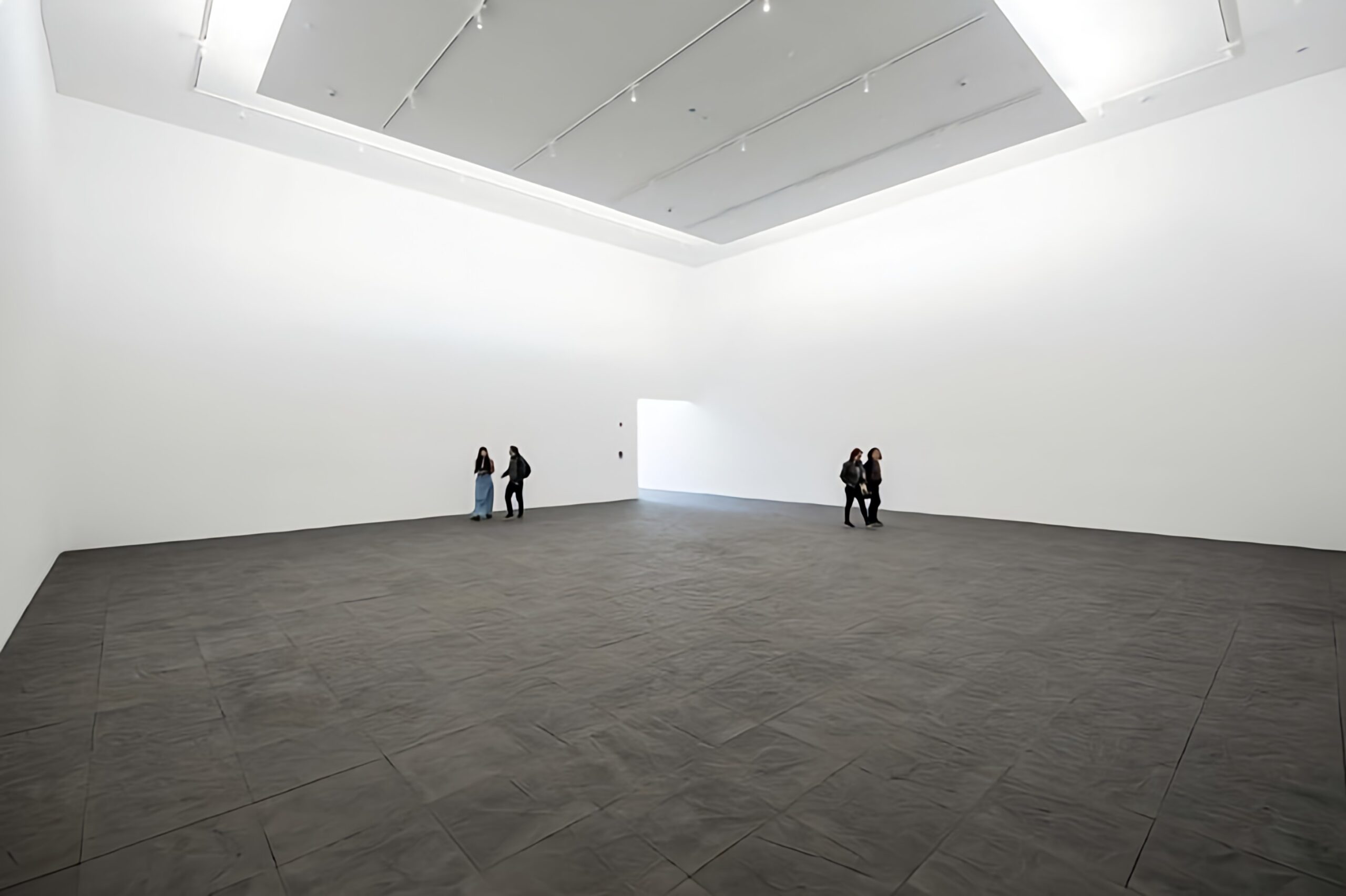
And you trample on the instruments of violence in Fragmentos, Espacio de Arte y Memoria, in Bogotá (2018).
From Dr Bernardi’s presentation: Fragmentos, Espacio de Arte y Memoria, Bogotá, 2018, by Doris Salcedo. Photo: Juan Fernando Castro.
Memorials play a leading role in transmitting collective memory through their ability to remain functional while offering shared experiences, setting emotions in motion with significant effects on our neural circuits. From this perspective, places of memory are increasingly conceived as open devices, where the aesthetic and representative aspect gives way to collective experience and the active participation of communities.
Our two wonderful guests explored the importance of perception, experience and inclusiveness of space through the fascinating links between music and the architecture of memory.